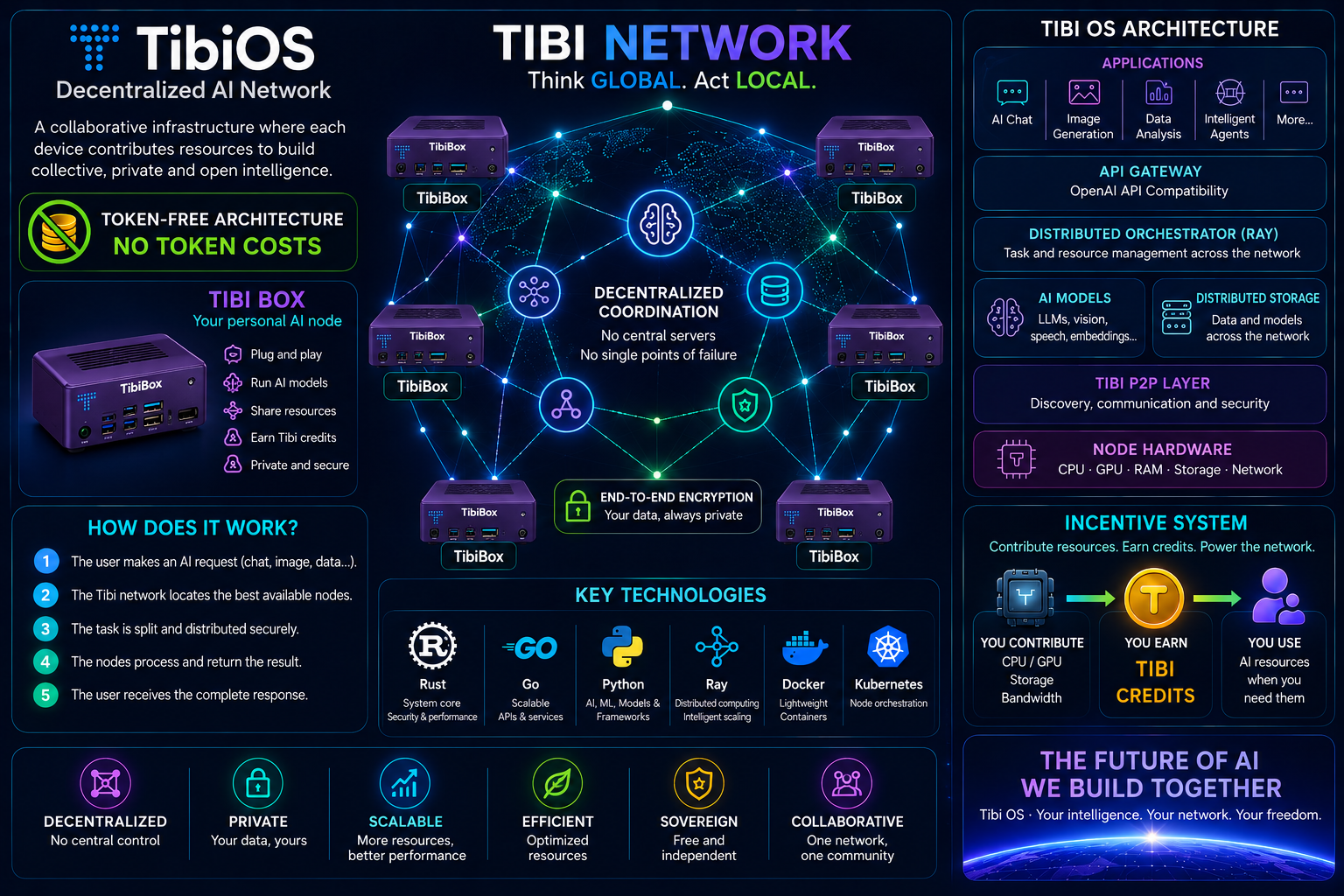
Run AI workloads across any available hardware. Connect PCs, GPUs, Macs or TibiBoxes and edge devices into a shared AI compute network. Build once, and let TibiOS decide where your workloads run.
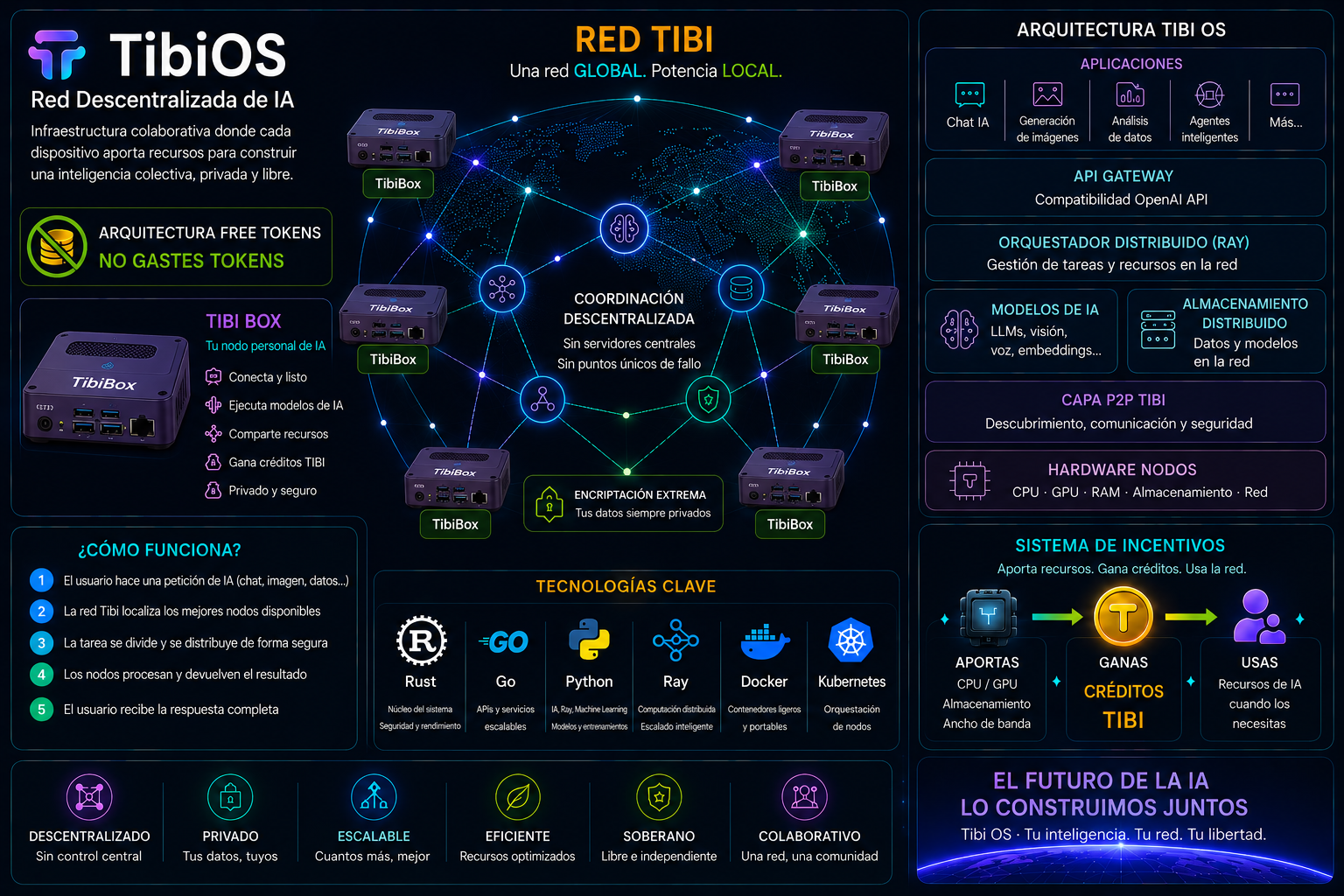
Ejecuta cargas de trabajo de IA en cualquier hardware disponible. Conecta PCs, GPUs, Macs o TibiBoxes y dispositivos edge en una red de cómputo de IA compartida. Constrúyelo una vez y deja que TibiOS decida dónde se ejecutan tus cargas de trabajo.
NO TOKEN BILL. NO PER-REQUEST TOKEN FEES.
SIN FACTURA DE TOKENS. SIN COSTO POR CADA REQUEST.
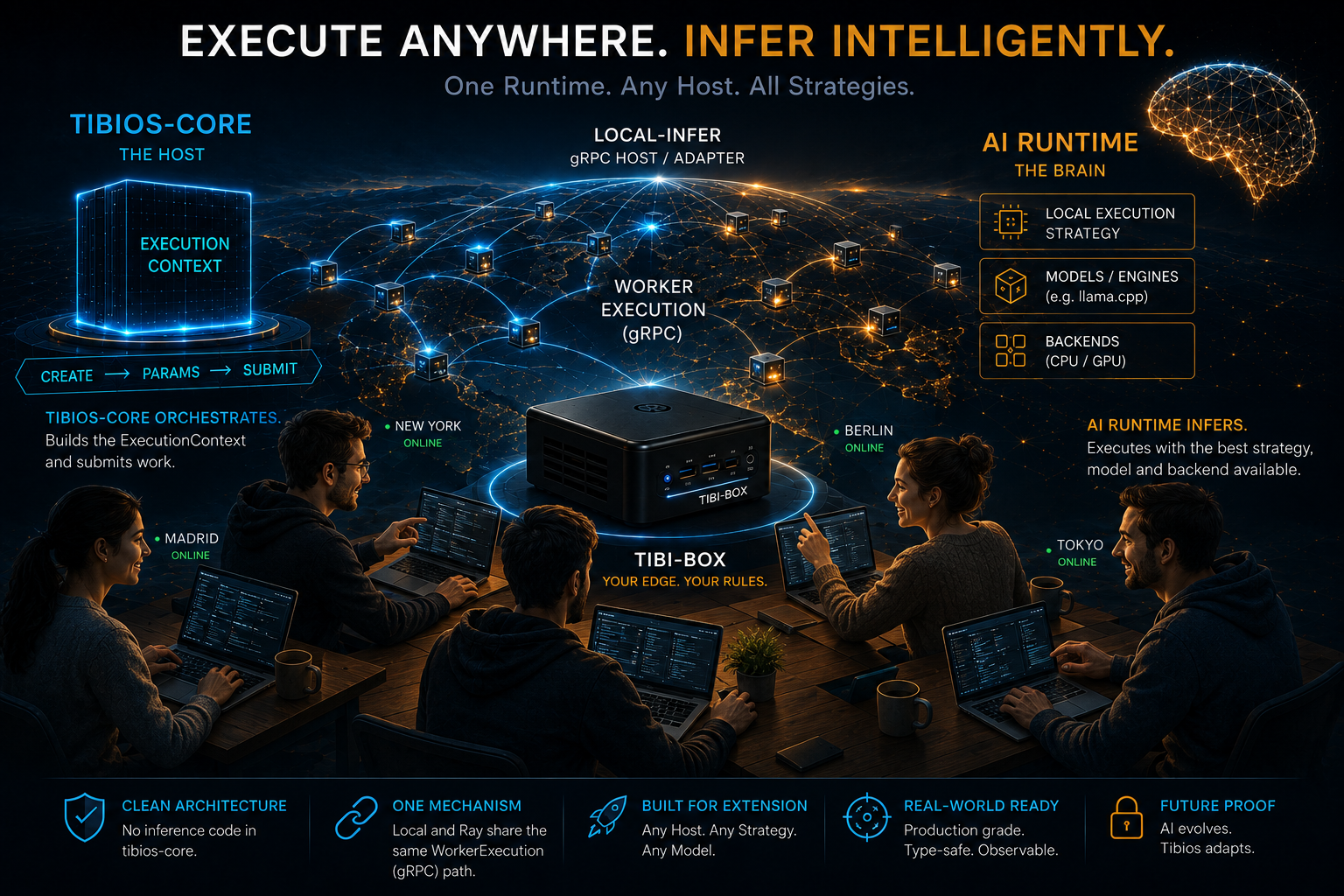
Across heterogeneous infrastructure: the application describes what should run, the Operating System decides if, where, when and how.
Sobre infraestructura heterogénea: la aplicación describe qué debe ejecutarse, el Sistema Operativo decide si, dónde, cuándo y cómo.
TibiOS is an operating system for collective intelligence that connects
people's devices into a cooperative computing and AI network. Every device contributes
resources, earns credits, and takes part in a shared infrastructure where the value
generated belongs to the community.
Qué es TibiOS
TibiOS es un sistema operativo para inteligencia colectiva que conecta
dispositivos de personas en una red cooperativa de computación e IA. Cada dispositivo
aporta recursos, recibe créditos y participa en una infraestructura compartida donde el
valor generado pertenece a la comunidad.
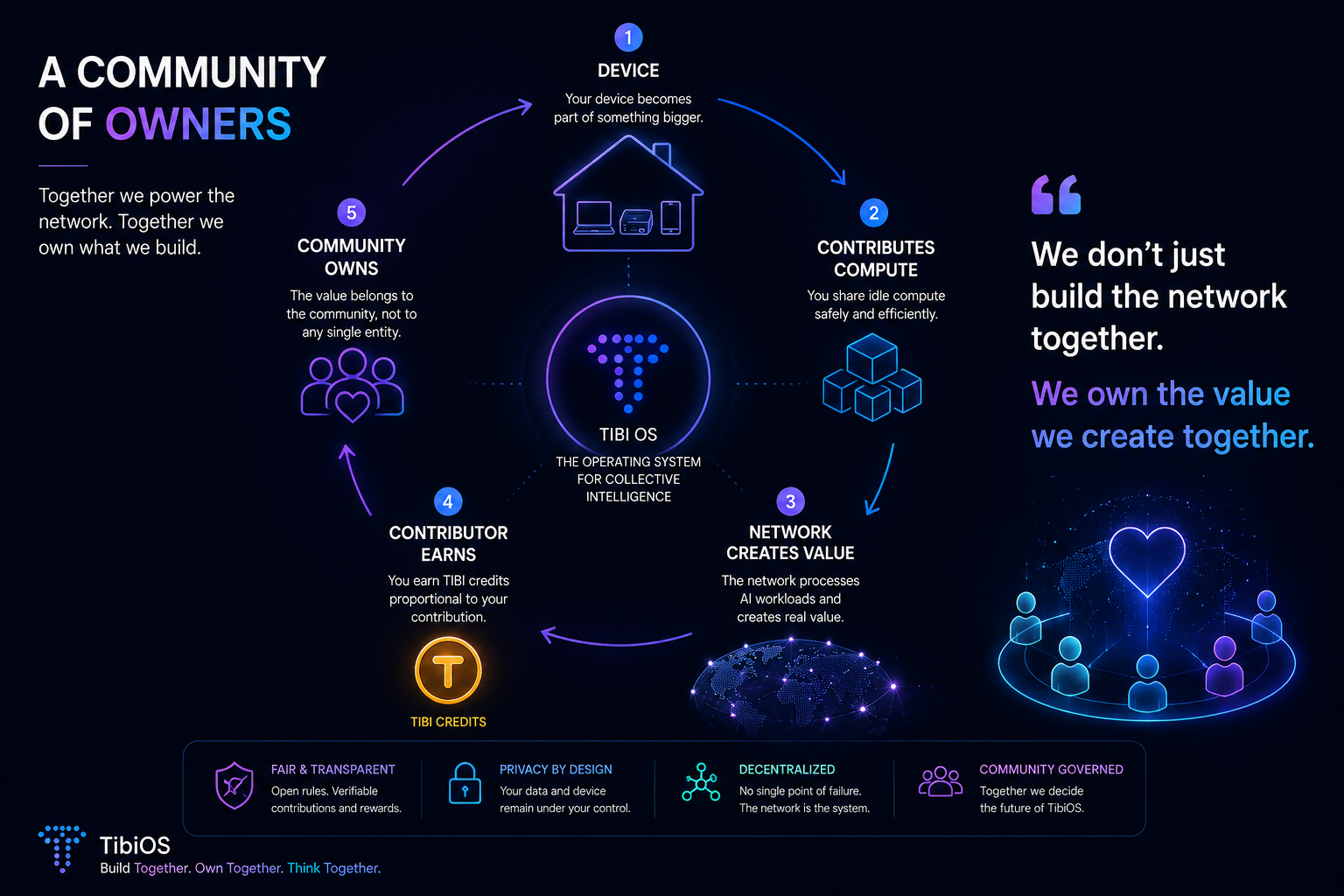
Your device contributes resources to the network and earns credits in return.
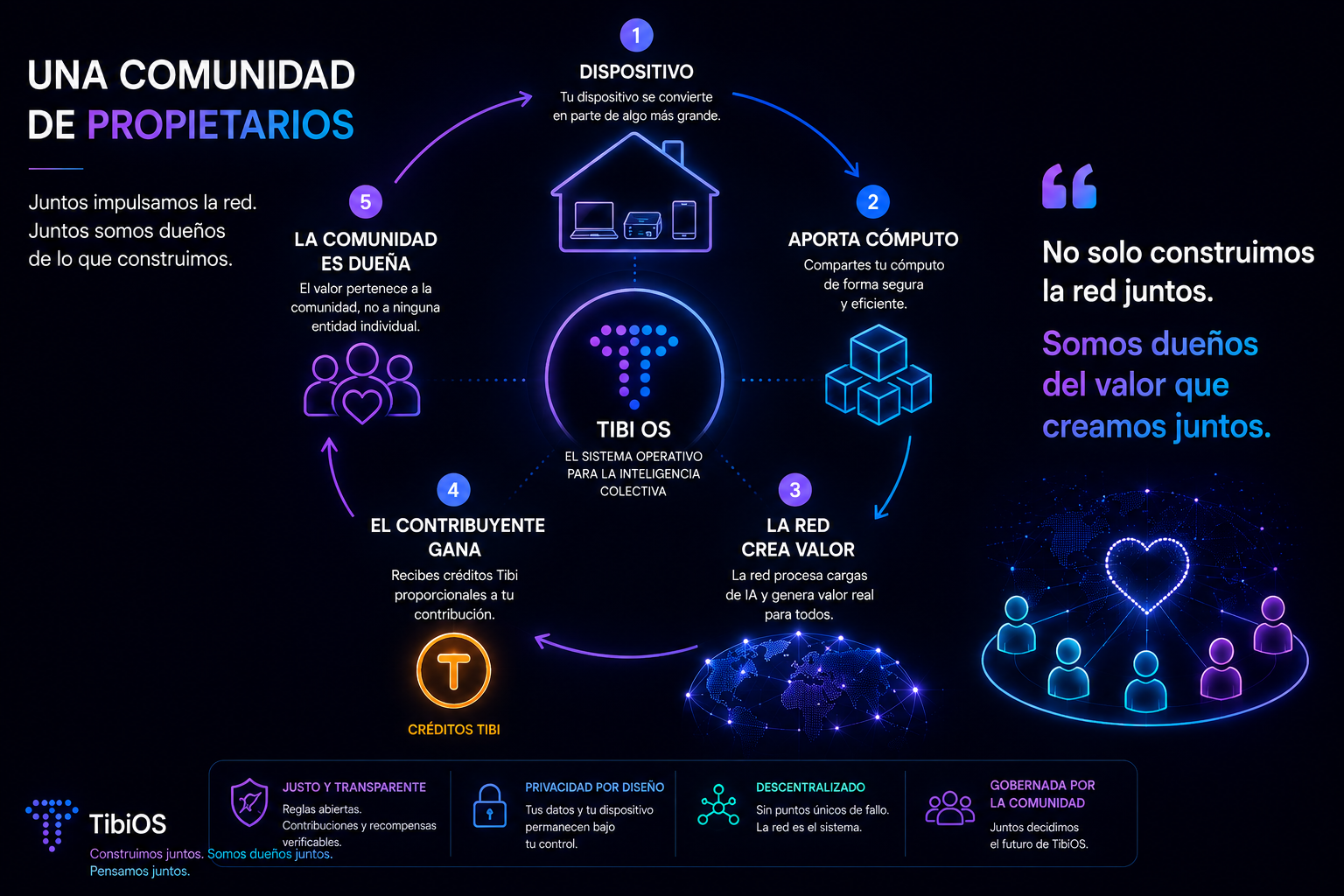
Tu dispositivo aporta recursos a la red y recibe créditos a cambio.
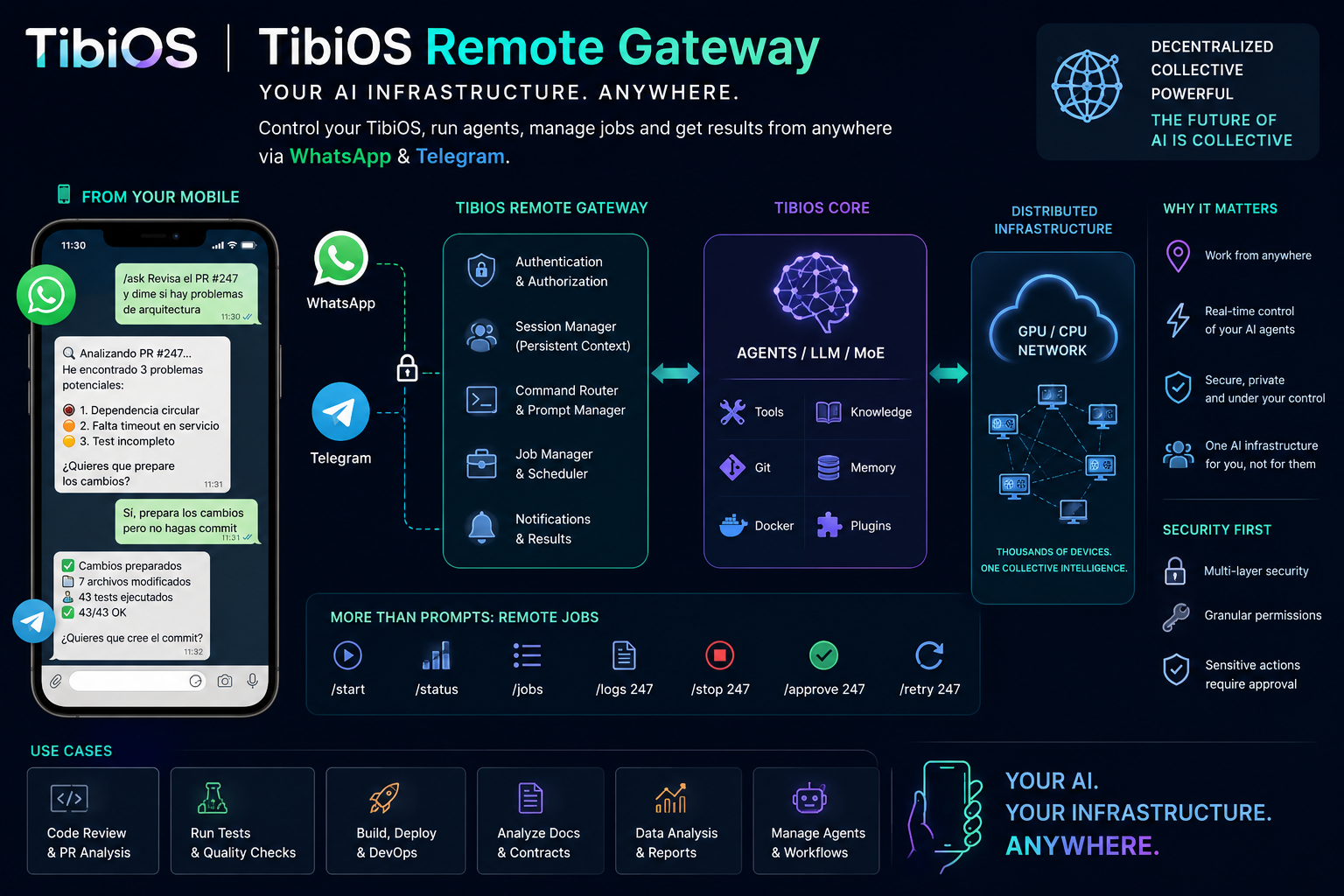
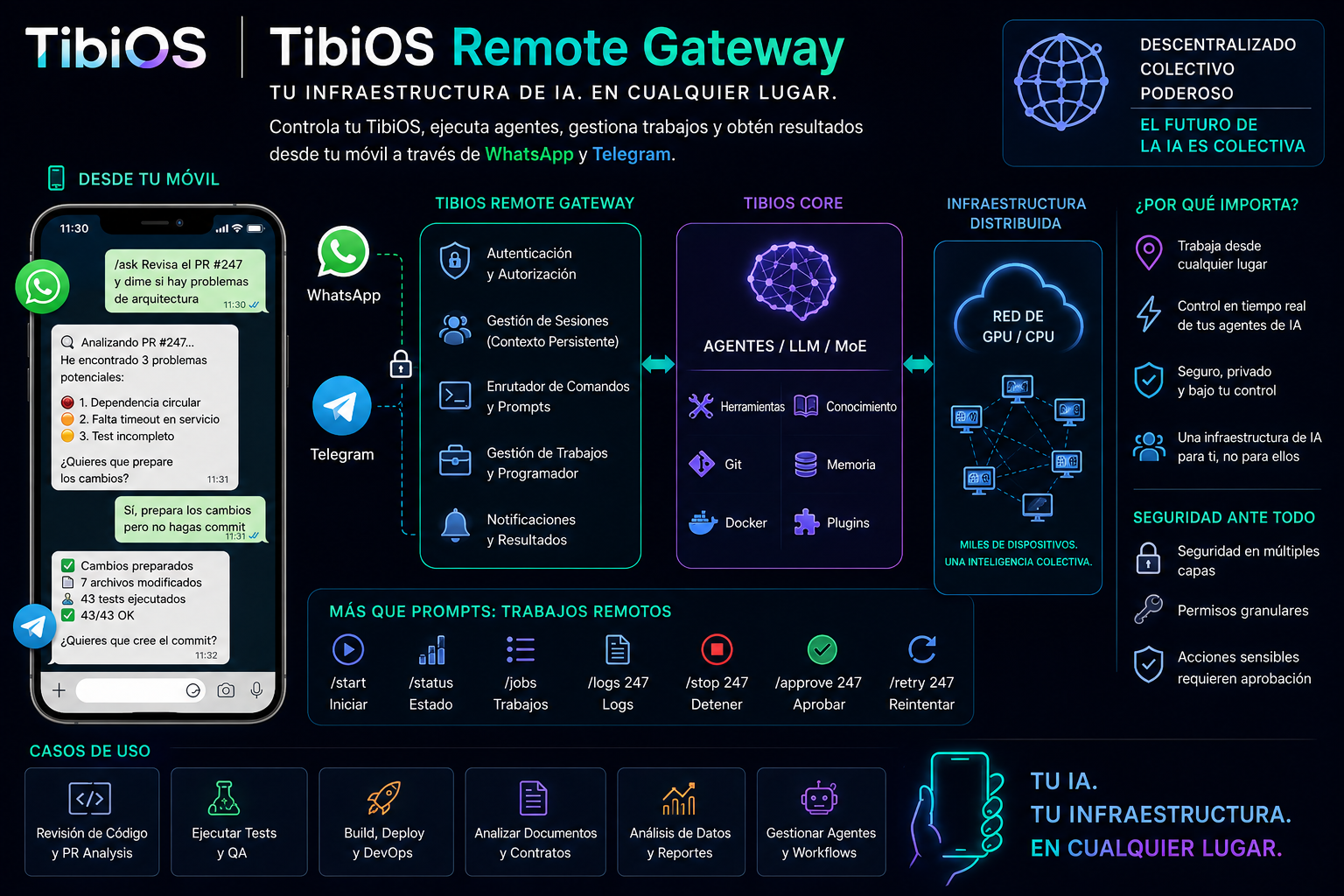
Control and use your AI infrastructure remotely from your phone, through everyday
channels like WhatsApp and Telegram: send prompts, run agents, check job status,
analyze code or documents, launch processes and get results directly on your phone.
The Gateway sits as a secure layer between those channels and TibiOS Core — handling
authentication, sessions, commands, jobs and notifications — while intelligence and
execution stay on your own TibiOS infrastructure, whether that's GPUs, CPUs, servers,
edge devices or a distributed network of resources.
More than prompts: run agents and workflows, inspect and control running jobs, analyze
repositories, code and Pull Requests, run tests and dev processes, analyze documents
and data, get real-time results and notifications, and keep sessions and context across
devices. Security first — authentication, authorization and granular permissions
protect every operation, and sensitive actions can require explicit approval before
running. WhatsApp and Telegram are just the channel; the intelligence, agents and
compute stay under TibiOS's control.
Controla y utiliza tu infraestructura de IA de forma remota desde el móvil, con canales
cotidianos como WhatsApp y Telegram: envía prompts, ejecuta agentes, consulta el estado
de trabajos, analiza código o documentos, lanza procesos y recibe resultados
directamente en tu teléfono. El Gateway actúa como una capa segura entre esos canales y
TibiOS Core — gestionando autenticación, sesiones, comandos, jobs y notificaciones —
mientras la inteligencia y la ejecución permanecen en tu propia infraestructura TibiOS,
ya sea formada por GPUs, CPUs, servidores, edge devices o una red distribuida de
recursos.
Más que prompts: ejecuta agentes y workflows, consulta y controla trabajos en ejecución,
analiza repositorios, código y Pull Requests, ejecuta tests y procesos de desarrollo,
analiza documentos y datos, recibe resultados y notificaciones en tiempo real, y
mantiene sesiones y contexto entre dispositivos. Seguridad primero — la autenticación,
autorización y permisos granulares protegen cada operación, y las acciones sensibles
pueden requerir una aprobación explícita antes de ejecutarse. WhatsApp y Telegram son
simplemente el canal; la inteligencia, los agentes y los recursos computacionales
permanecen bajo el control de TibiOS.
Your AI. Your infrastructure. Anywhere.
Tu IA. Tu infraestructura. En cualquier lugar.
The vision: a distributed network
La visión: una red distribuida
Vision material for the project — where TibiOS is headed long-term, beyond the current state of the code.
Material de visión del proyecto — hacia dónde apunta TibiOS a largo plazo, más allá del estado actual del código.
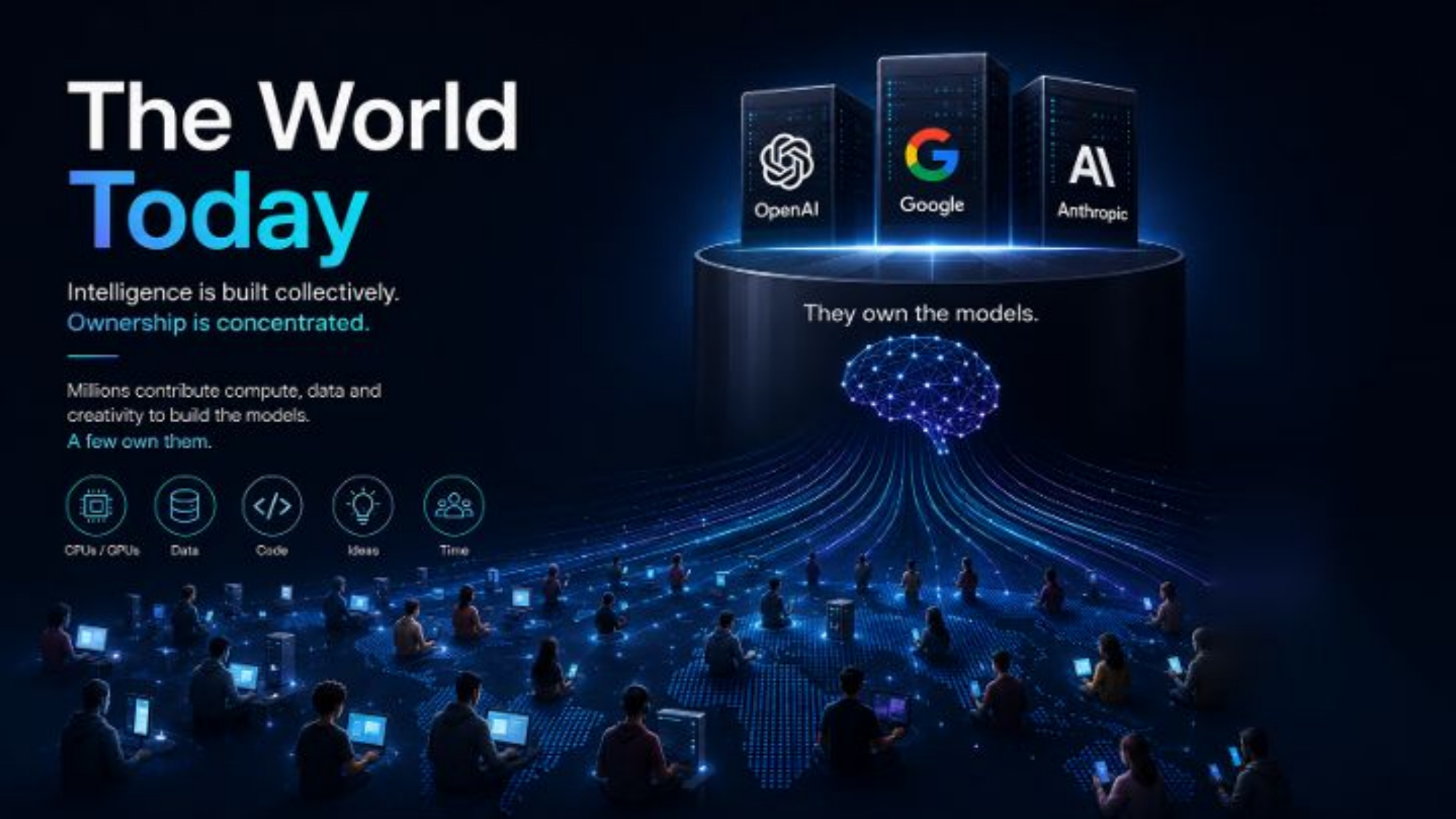
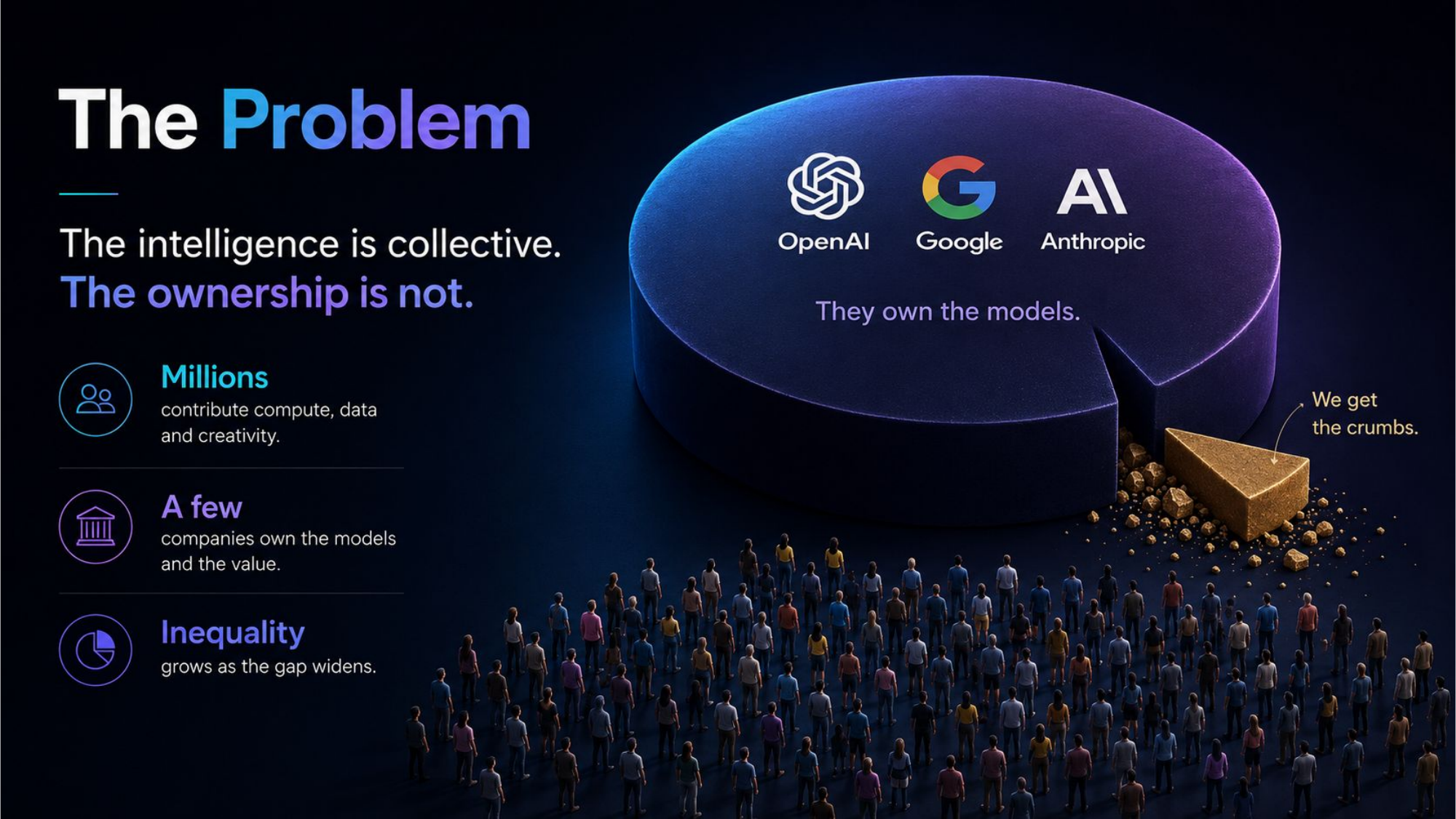
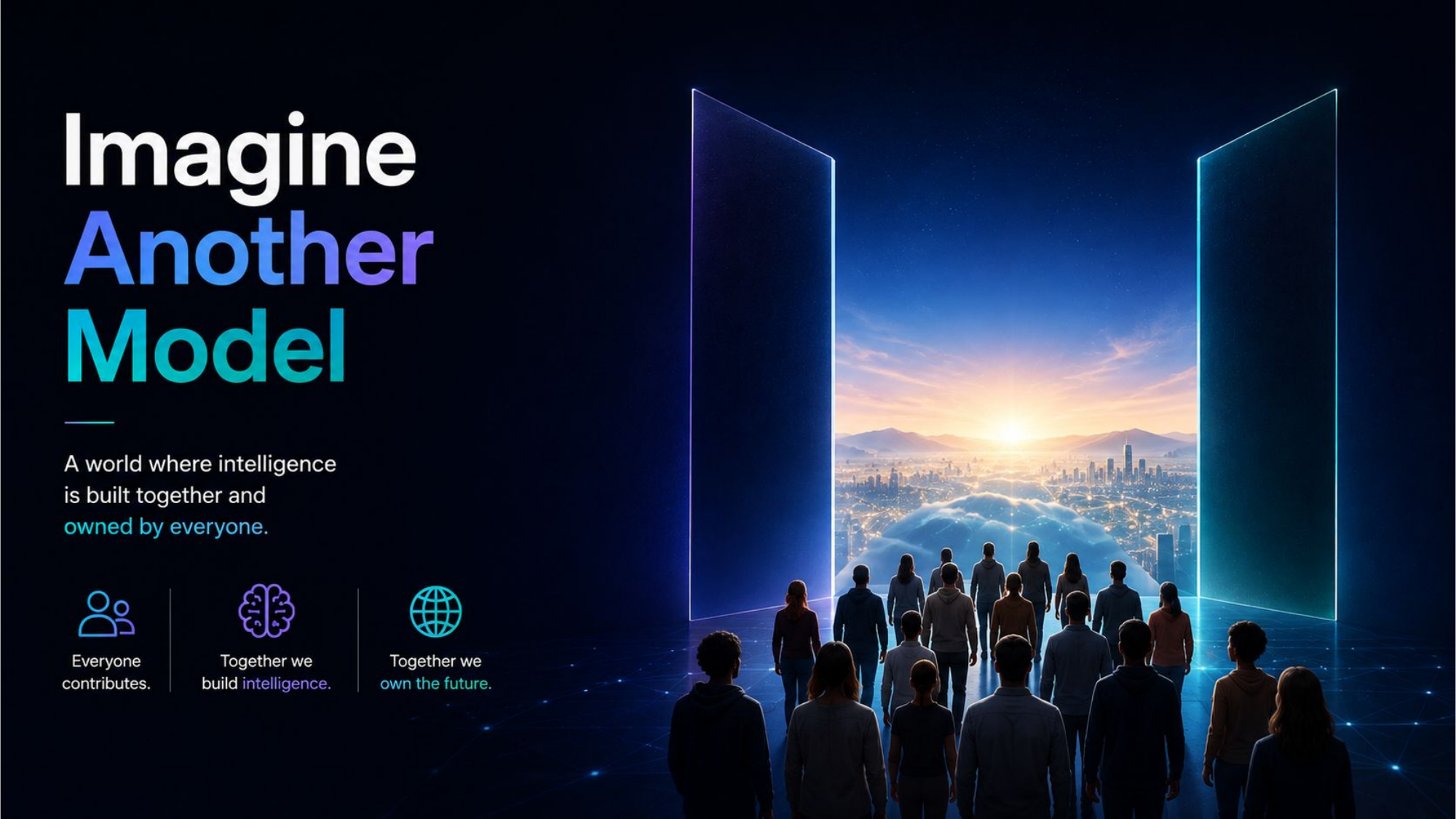
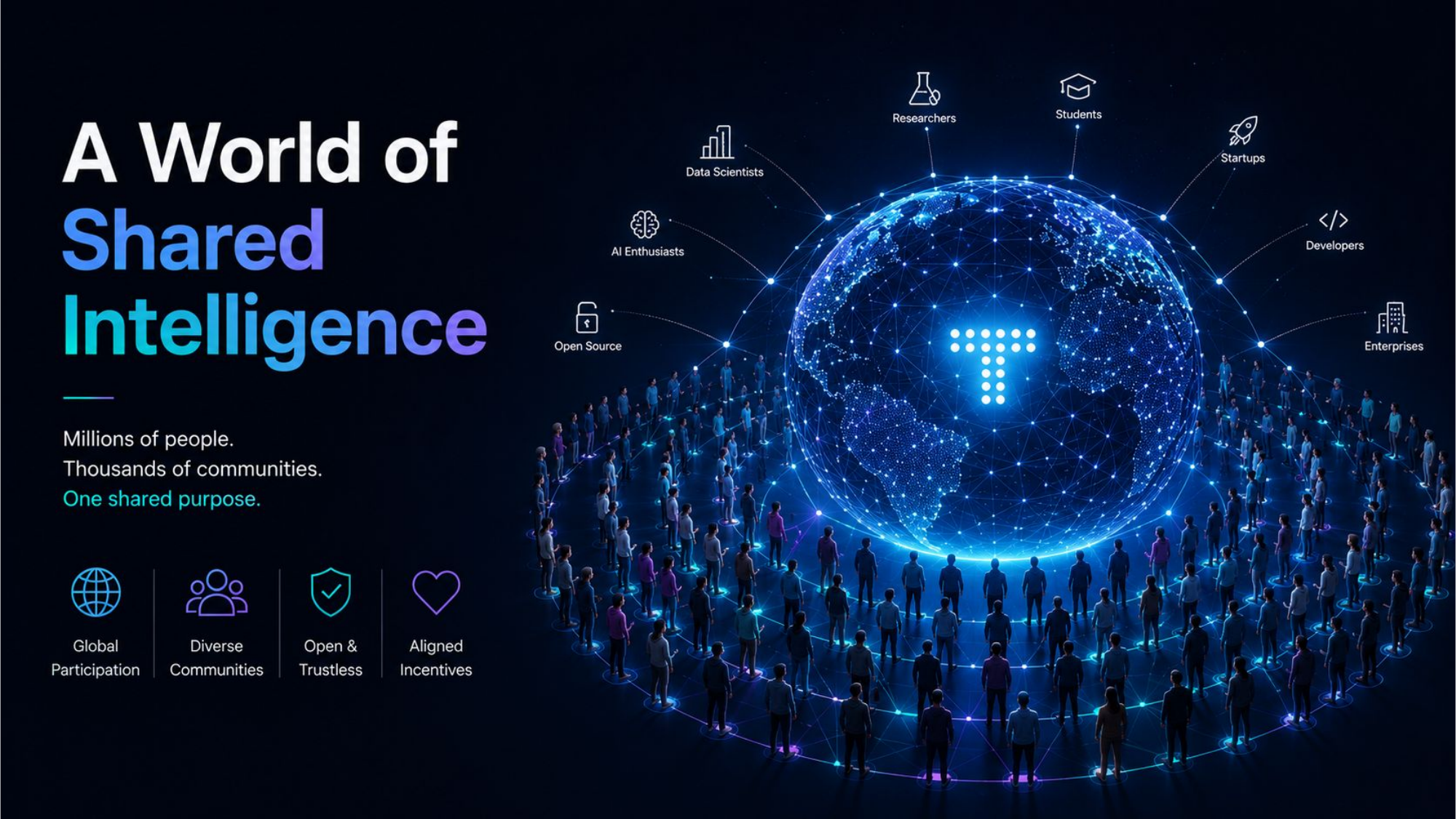
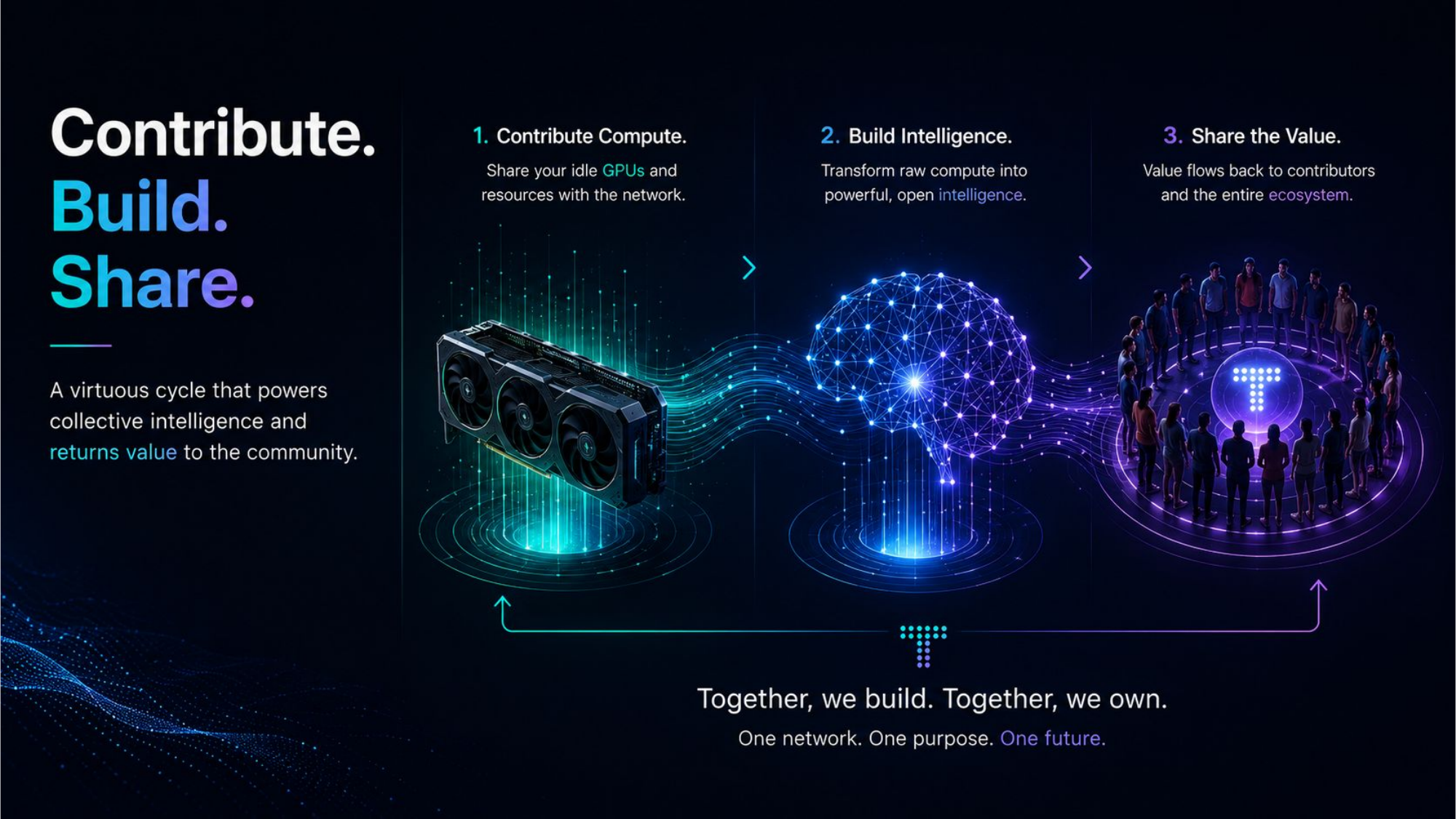
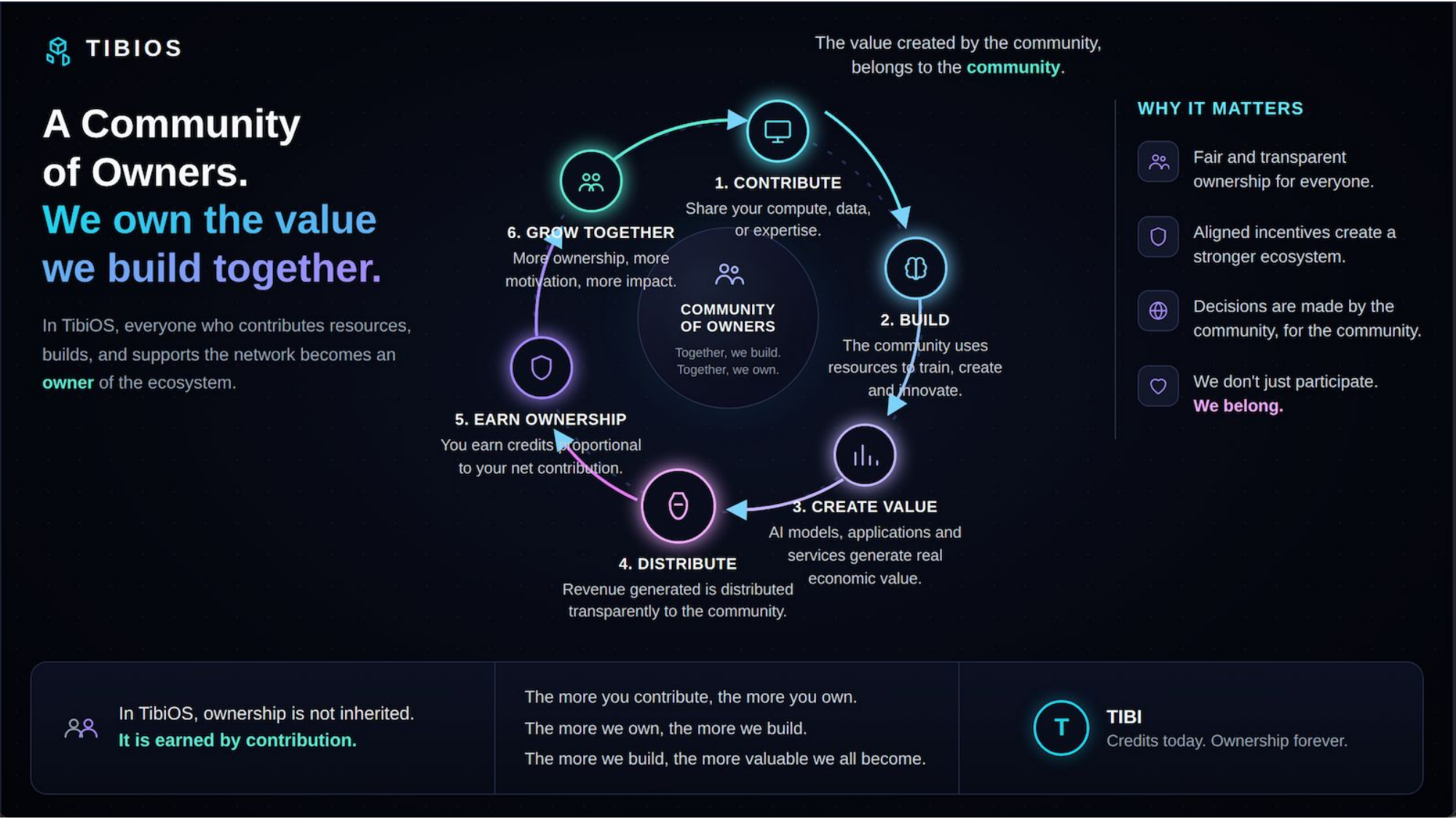
The world today: intelligence is built collectively — ownership stays concentrated.El mundo hoy: la inteligencia se construye colectivamente — la propiedad queda concentrada.The problem: millions contribute compute, data and ideas. A few own the models.El problema: millones aportan cómputo, datos e ideas. Unos pocos son dueños de los modelos.Imagine another model: a world where intelligence is built together and owned by everyone.Imagina otro modelo: un mundo donde la inteligencia se construye juntos y es propiedad de todos.A world of shared intelligence: millions of people, thousands of communities, one shared purpose.Un mundo de inteligencia compartida: millones de personas, miles de comunidades, un propósito compartido.Contribute. Build. Share. — the virtuous cycle that powers collective intelligence.Aporta. Construye. Comparte. — el ciclo virtuoso que impulsa la inteligencia colectiva.A community of owners: we own the value we build together.Una comunidad de propietarios: somos dueños del valor que construimos juntos.
It's a community of owners where every machine adds up, contributing value and returns
to its members and partners.
Es una comunidad de propietarios donde cada máquina suma, aportando valor y retorno a sus
miembros o socios.
The best Artificial Intelligence — frontier models — for homes, at zero cost, on basic hardware.
La mejor Inteligencia Artificial —modelos frontier— para los hogares, a costo cero,
con hardware básico.
Today, artificial intelligence is built collectively — millions of people contribute
compute, data and ideas — but ownership of the models stays concentrated in a handful of
companies. TibiOS's vision proposes a different model: a global network where any device
(a TibiBox, a server, an idle GPU) contributes resources to a collective, private
intelligence, with no central servers and no single points of failure.
The cycle that powers that network is simple: contribute compute,
build intelligence out of that shared compute, and return
the value generated to those who contributed — the more you contribute, the more you own
of the ecosystem.
Today's models are free and open, sourced from
Hugging Face .
The next generation — trained by the TibiOS ecosystem itself — will belong to the
community of owners that built it.
We've already begun training our first specialized model for the home:
Tibi Sauron 1.0.
Hoy, la inteligencia artificial se construye de forma colectiva —millones de personas aportan
cómputo, datos e ideas— pero la propiedad de los modelos queda concentrada en unas pocas
compañías. La visión de TibiOS propone otro modelo: una red global donde cualquier dispositivo
(una TibiBox, un servidor, una GPU ociosa) aporta recursos a una inteligencia colectiva,
privada y sin servidores centrales ni puntos únicos de fallo.
El ciclo que sostiene esa red es simple: aportar cómputo, construir
inteligencia a partir de ese cómputo compartido, y devolver el valor generado a
quienes contribuyeron — quien más aporta, más participa de la propiedad del ecosistema.
Los modelos de hoy son libres y abiertos, provienen de
Hugging Face .
La próxima generación —entrenada por el propio ecosistema TibiOS— será propiedad de la
comunidad de propietarios que la construya.
Ya hemos comenzado a entrenar nuestro primer modelo especializado en el hogar:
Tibi Sauron 1.0.
Watch our vision on YouTube
Escucha nuestra visión en YouTube
Components
Componentes
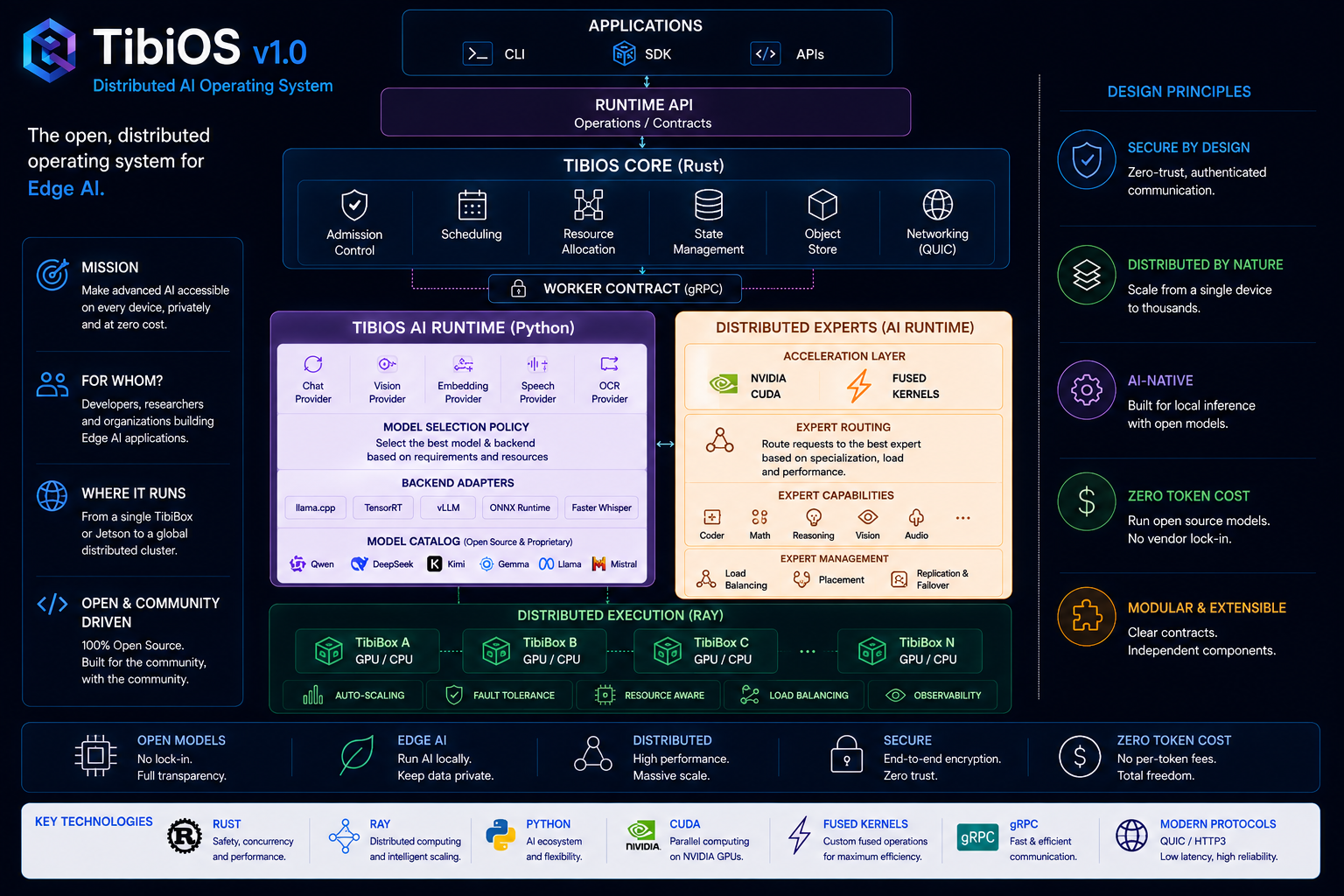
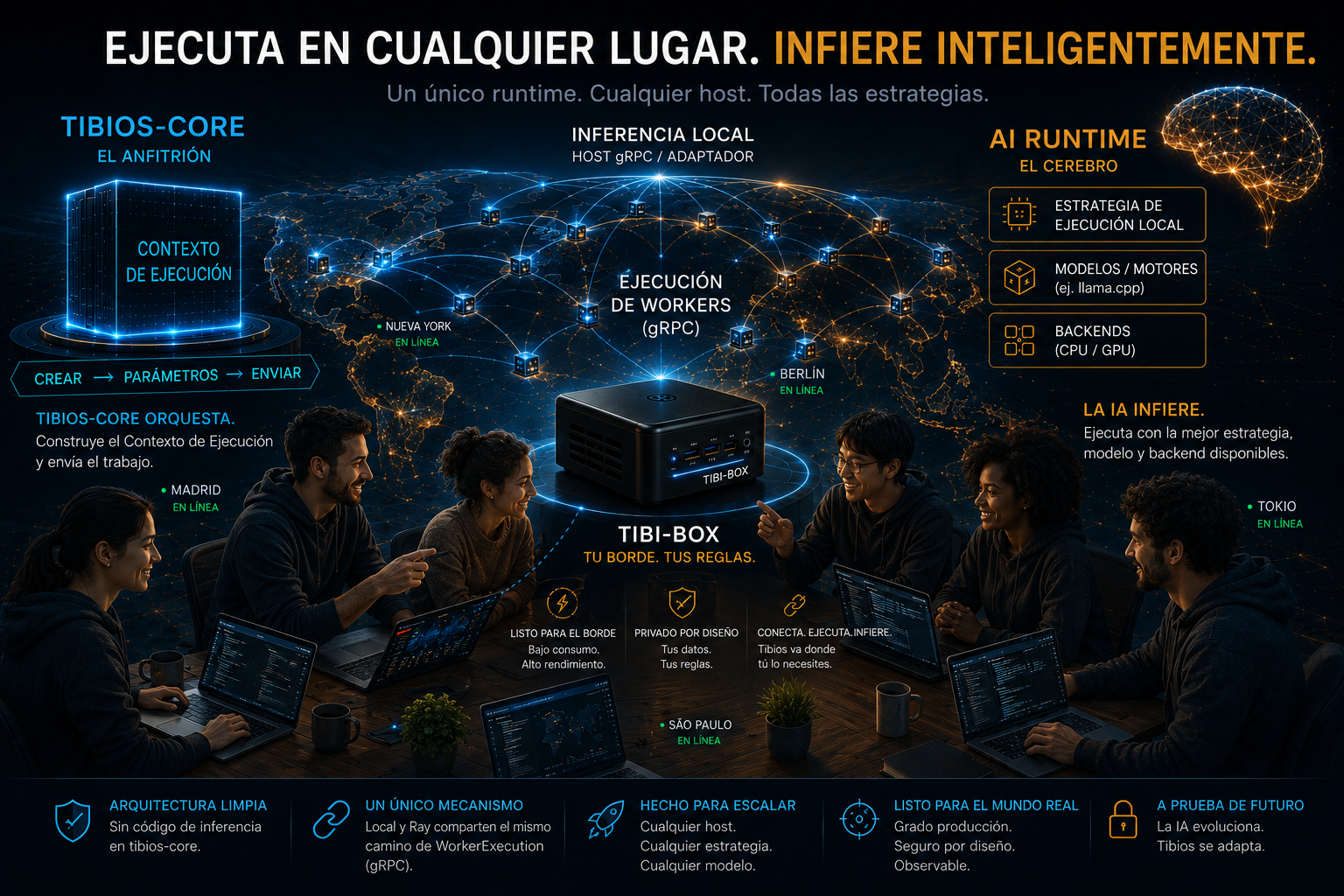
tibios-core
Rust
The Runtime itself: the complete architectural model, a Cargo workspace, and the Composition Root that wires domains and Worker adapters.
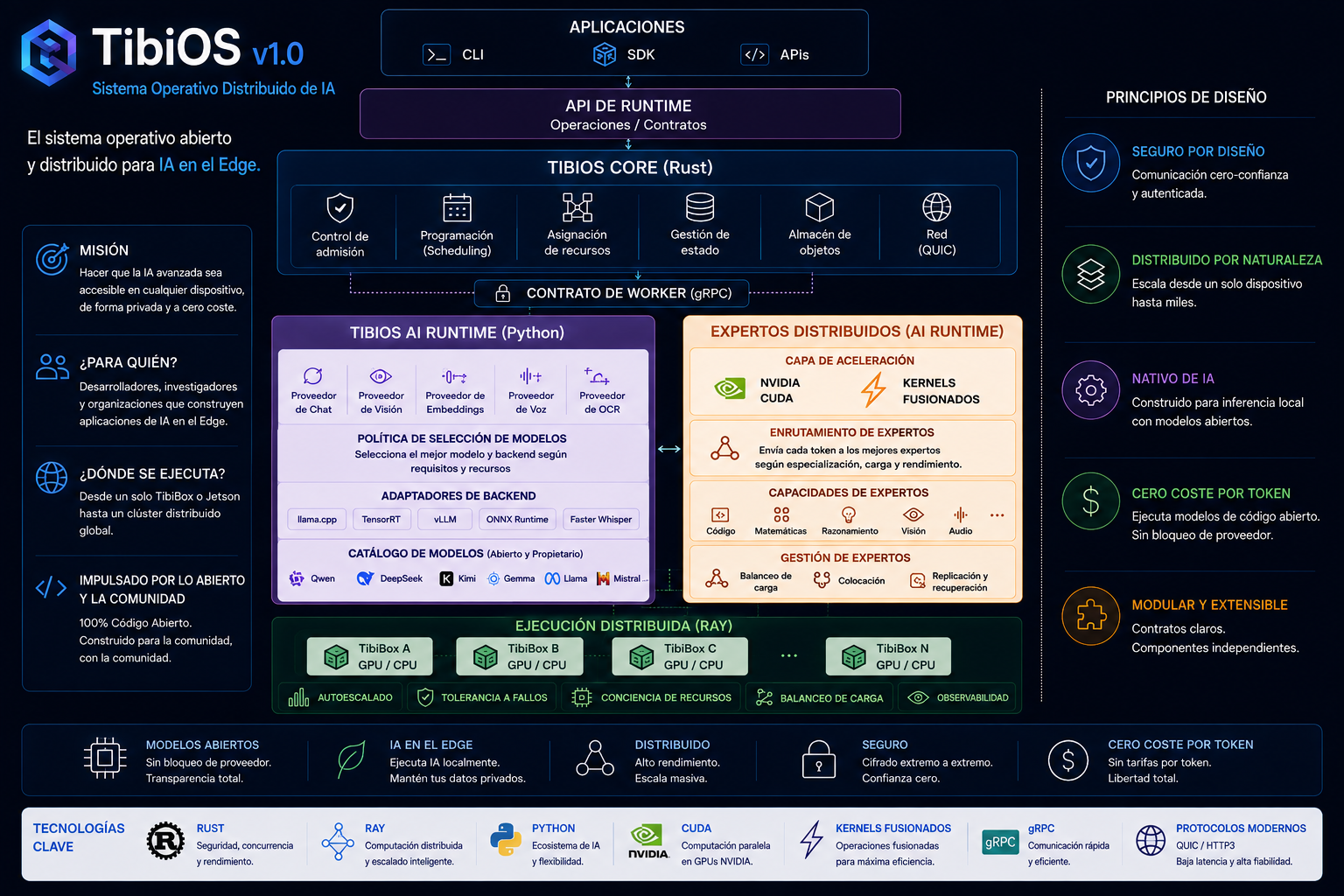
El Runtime en sí: modelo arquitectónico completo, workspace de Cargo, Composition Root que cablea dominios y adaptadores de Worker.
ai-runtime
Python / Ray
Heavy AI execution Worker — one of the two interchangeable implementations of the Worker Contract.
Worker de ejecución pesada de IA — una de las dos implementaciones intercambiables del Worker Contract.
proto/
Protocol Buffers
The shared, language-neutral gRPC contract between the Runtime and its Workers.
El contrato gRPC compartido, neutral a lenguaje, entre el Runtime y sus Workers.
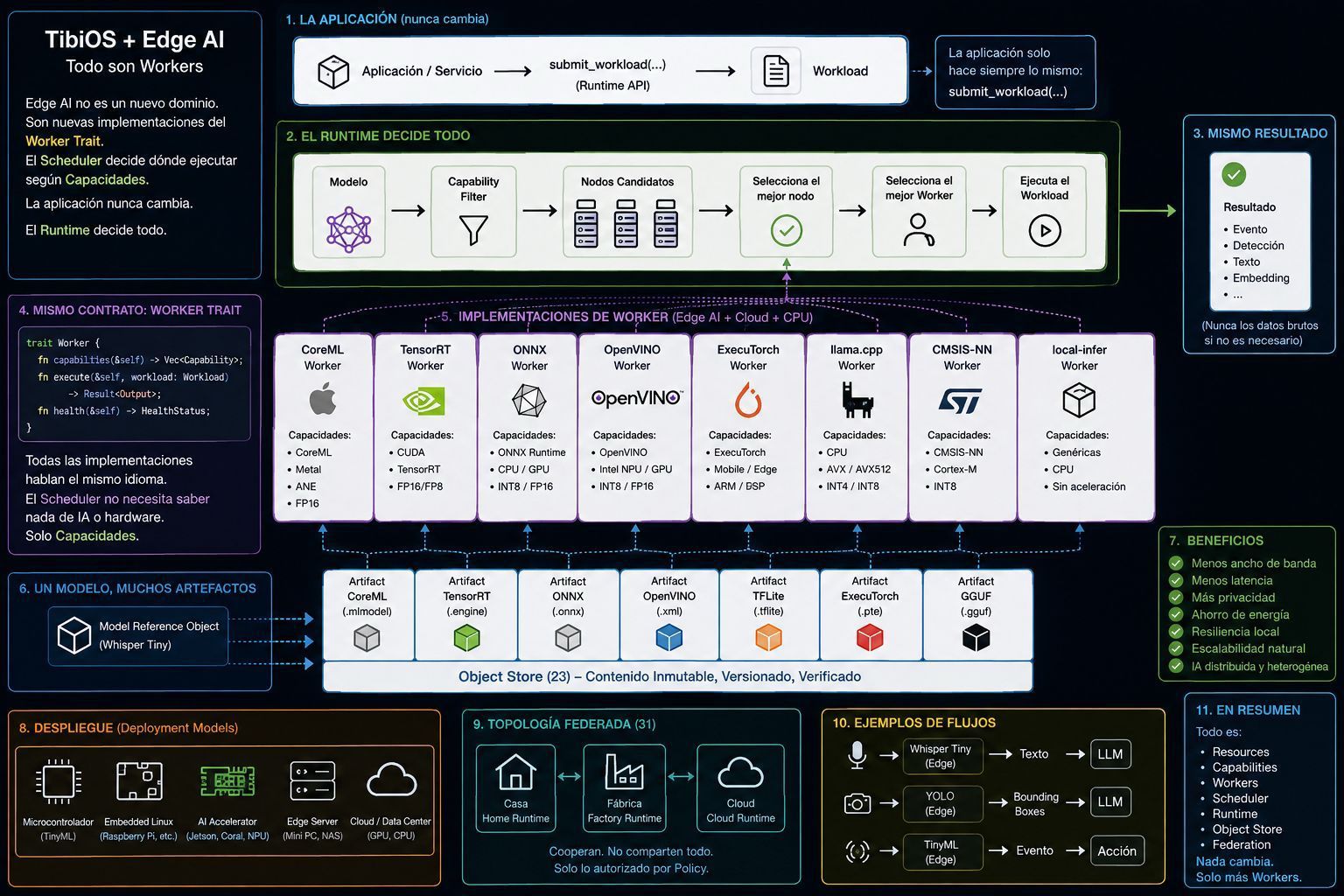
Everything is a Worker
Todo son Workers
The application never changes. The same contract (Worker) covers CoreML, TensorRT, ONNX, OpenVINO, llama.cpp and more — the Runtime decides which implementation executes each Workload.
La aplicación nunca cambia. El mismo contrato (Worker) cubre CoreML, TensorRT, ONNX, OpenVINO, llama.cpp y más — el Runtime decide qué implementación ejecuta cada Workload.
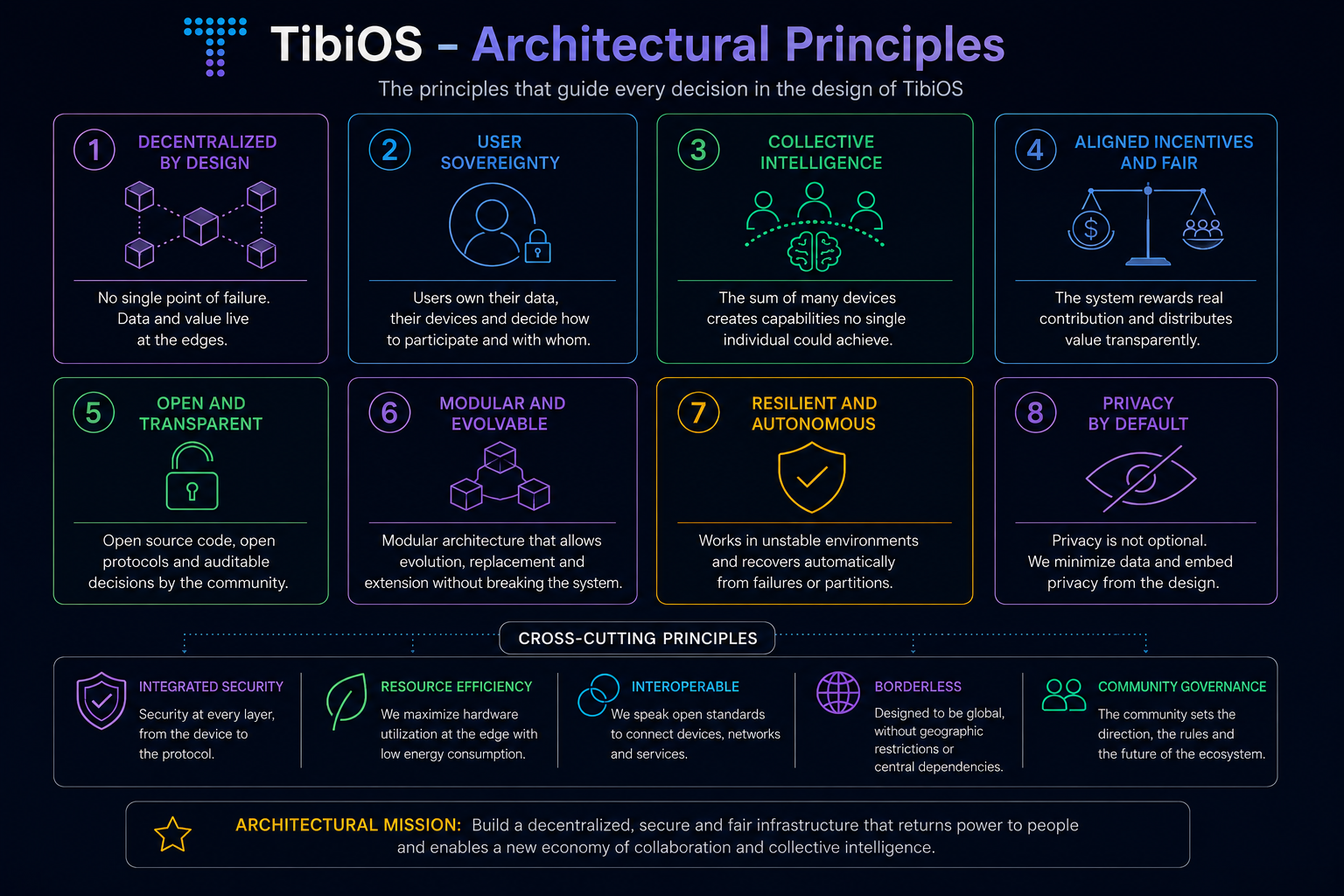
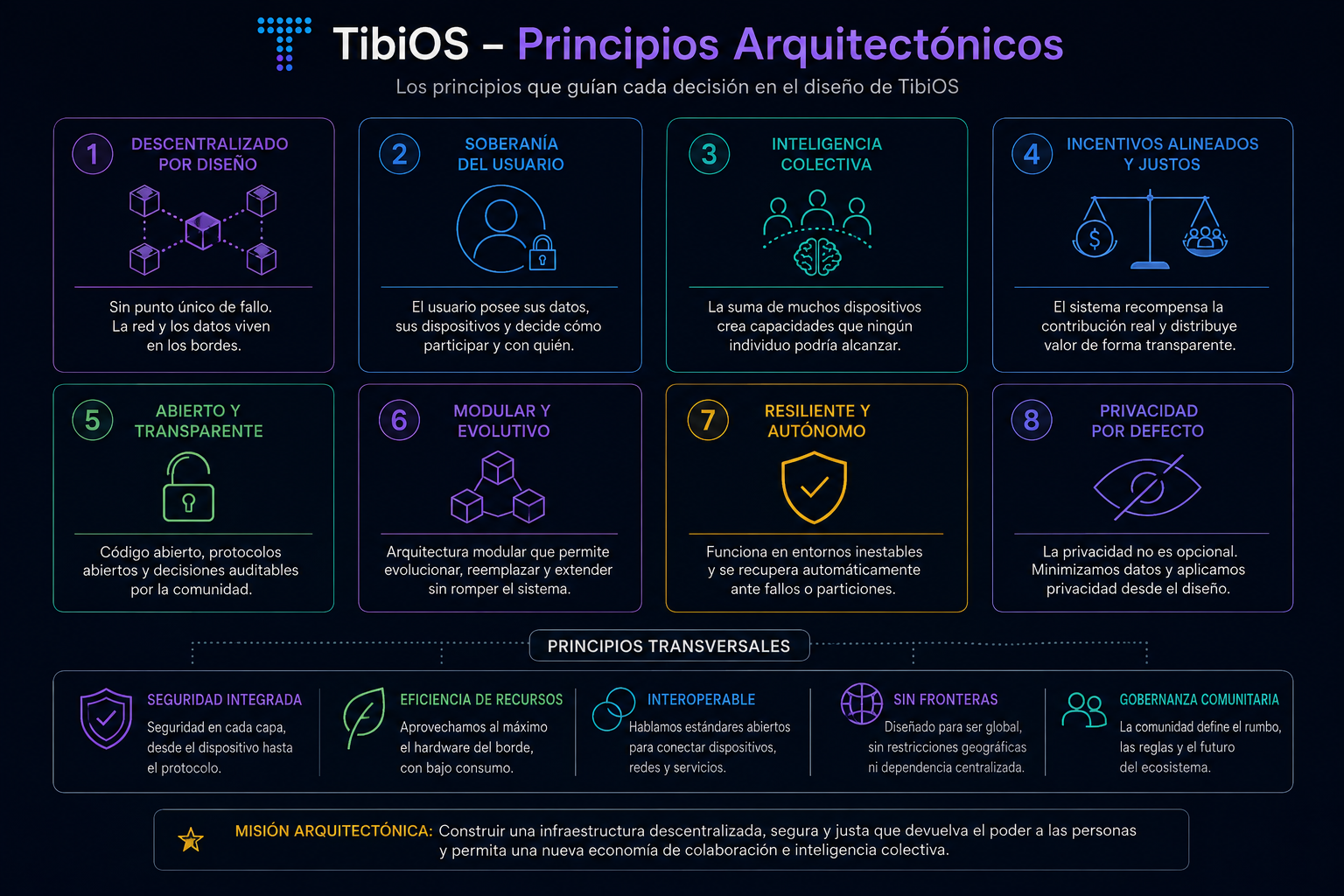
Architectural principles
Principios arquitectónicos
Architecture before implementation
Arquitectura antes que implementación
Describing a capability doesn't imply implementing it. Cost begins when real behavior exists, not when a possibility is described.
Describir una capacidad no implica implementarla. El costo empieza cuando hay comportamiento real, no cuando hay una posibilidad descrita.
Ownership
Ownership
Every piece of mutable state has exactly one authoritative owner. Coordination between domains always happens through published facts, never shared mutable state.
Todo estado mutable tiene exactamente un dueño autoritativo. La coordinación entre dominios ocurre siempre vía hechos publicados, nunca estado compartido.
TibiOS — the 8 architectural principles.TibiOS — los 8 principios arquitectónicos.


 .
.